Put me in a box, please.
On Szilveszter Makó and the pleasure of being flattened into a storybook
Szilveszter Makó knows how to put people into a box.
The Hungarian photographer’s work with household names for publications such as Vogue, The Cut and brands like Maison Margiela has surely made its way to the top of your digest-list. His visual profile is strung together with surrealist settings and costumes, heavily grained and gritty, his subjects set curiously within diorama-like enclosures and two-dimensional planes of color.
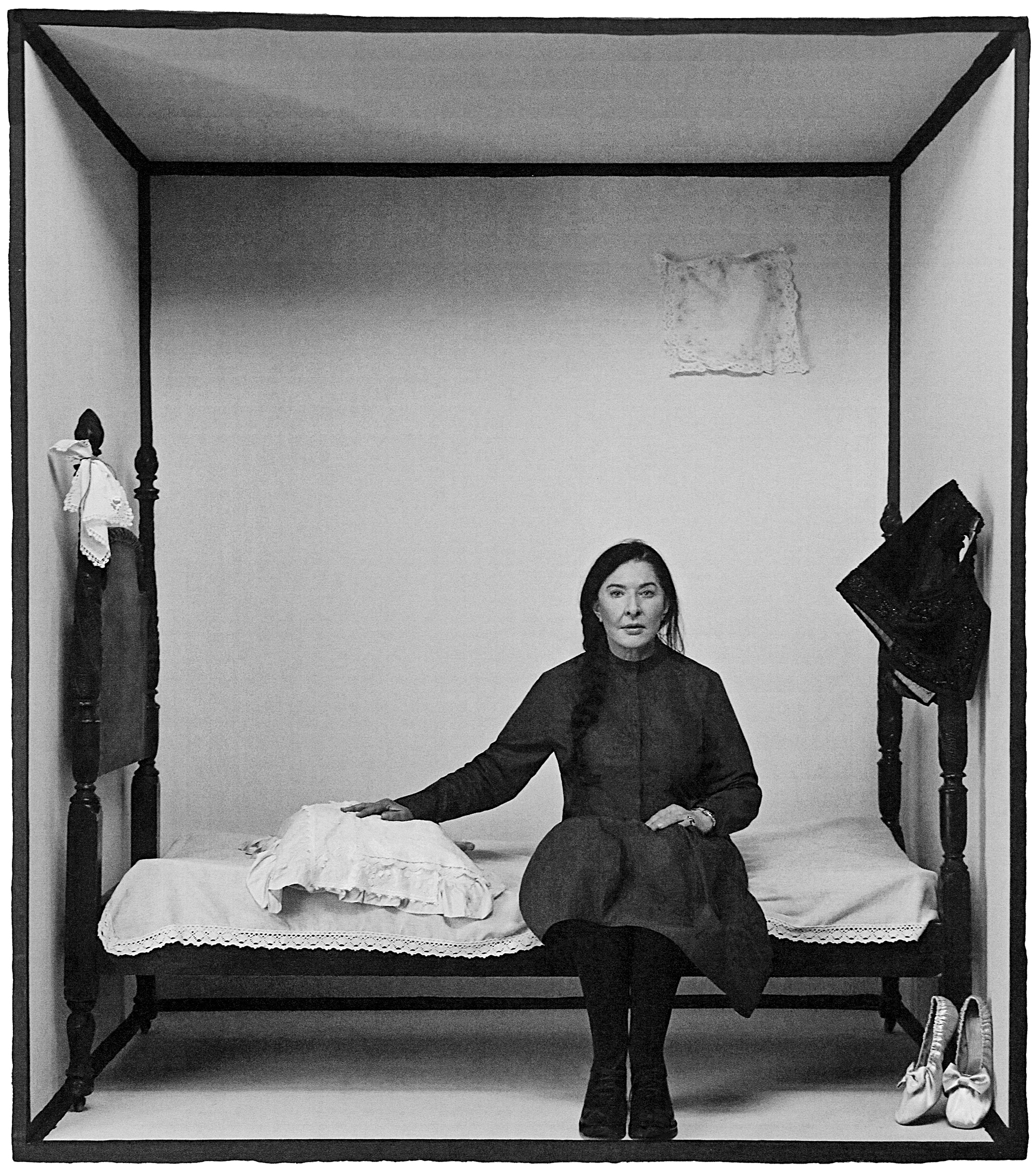
Marina Abramović for Revista de Milenio
Aperture’s editor Chiara Nonino observes that boundaries are quite literally Makó’s modus operandi, not a metaphor for the way he approaches his work: “He is a master of thinking inside the box”. Makó captures his subjects straight-on, framed as paper dolls caught mid-story in their fairytale worlds. Often, he places his models on their backs, suspending them weightless against their handmade tableaux. Nonino calls this quality exactly what it is: hermetic. An almost air-tight, isolated world; us viewers peering into his tableaux from above or head-on, believable because it is so unapologetic in its whimsy.
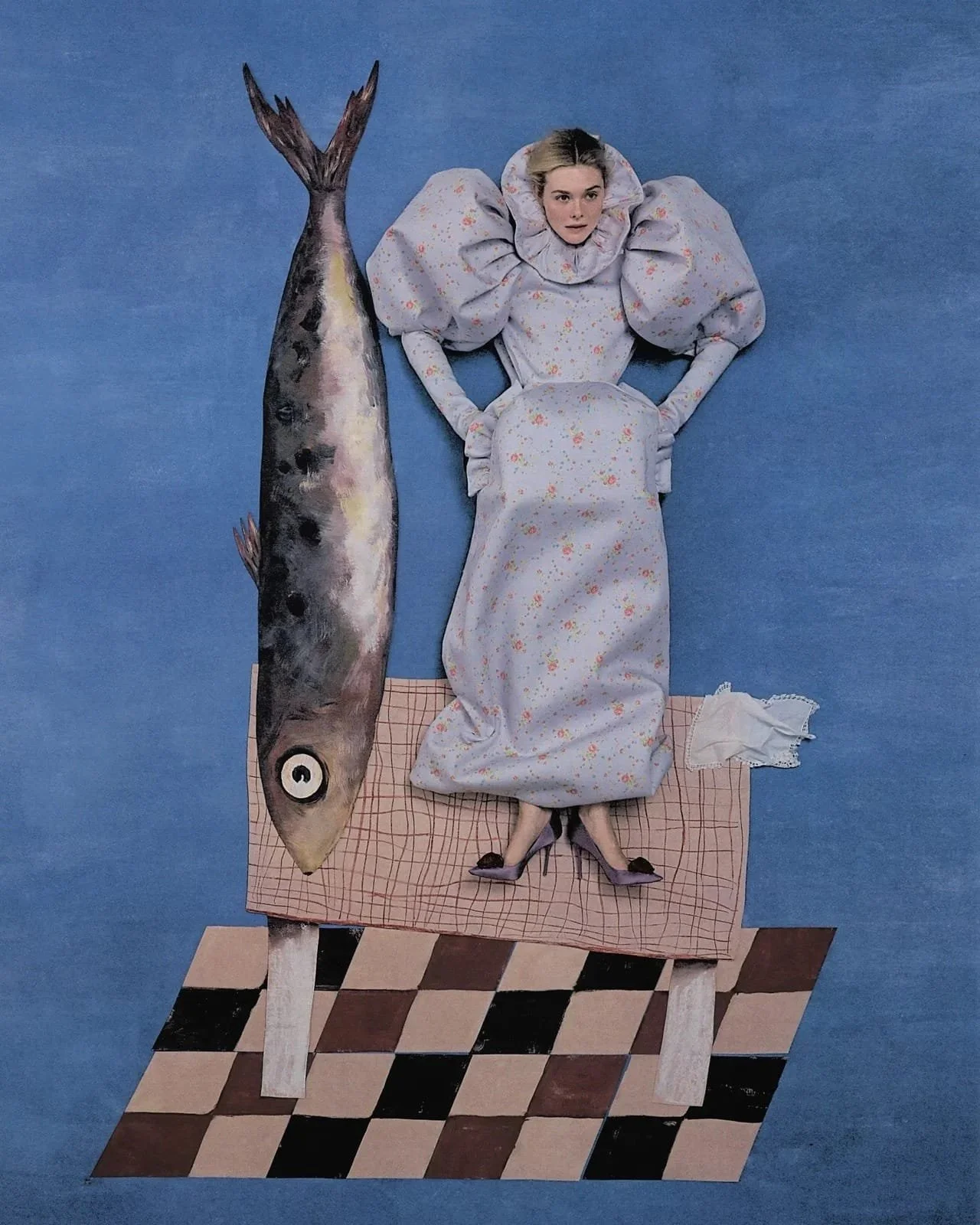
Elle Fanning for Who What Wear
Take, for example, Elle Fanning for Who What Wear—head-on and supine, in a floral dress with accentuated gigot sleeves and a collar that pays homage to the Pierrot. Beside her, the giant sardine complements the tablescape and tiled floor, all painted in a style that treads the line between folk and naïve art.
It is wondrous that a world so flattened and enclosed can feel so enormous. Is it because of his meticulous art direction? Because his images could be another page torn from the children’s books or the art history books on our shelves? Or, perhaps, is it because we enjoy the moment to breathe when we can look at some of contemporary culture’s most influential people like figurines, arrested in a time that couldn’t be any further away from the present?
It may be worth asking how much of this spell depends on who is lying in the box. Replace Fanning with Jane Doe, and Makó’s sitter may just become a stranger in a balloon-sleeved gown next to a fish twice her size: still charming, but a bit stranger, and not as frictionless. Fame supplies the permission to play—it is easier to assume that these icons chose to be dolls, to lie face up at the camera and be confined to their fairytale world. The whimsy feels like a game they’re in on. An anonymous sitter might read as more vulnerable, more of a specimen than an iconic figurine. In this case, depending on whether we believe the sitter has power over their own image, the image could shift from playful to unsettling—or even to slightly objectifying.
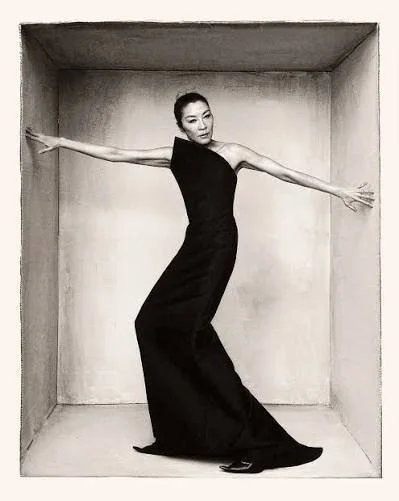
Michelle Yeoh for W Magazine
Celebrity culture is its own kind of boxing-in. Famous people live as images: flattened, posed, and easily stripped of depth. They are icons that stand for more than themselves. Makó's planar style turns these conditions literal. Fame also creates a pleasure of reversal. People that we usually look up to lie before us instead, passive and supine. Perhaps part of the enjoyment may be given to this inversion of power.
Exchange iconicity for anonymity, and the images ask something different of us. Without the icon, there is more space to read the picture itself. The enigmatic glances, the texture of each prop, the beauty of the strange. Gazes that read as a cheeky wink from a star become questions from strangers instead. It is somehow harder to assume that they agreed to play this game, so we would search more into the frame for who holds the power. Anonymity may also return what fame takes. While recognition ends looking, a stranger cannot be recognized, only observed. We see Bad Bunny photographed in a suit and pava (traditional straw hat), and say, That’s Bad Bunny in a suit and pava. Without this, we could find ourselves lingering longer on each stylistic choice, as the image would ask for more than a glance.
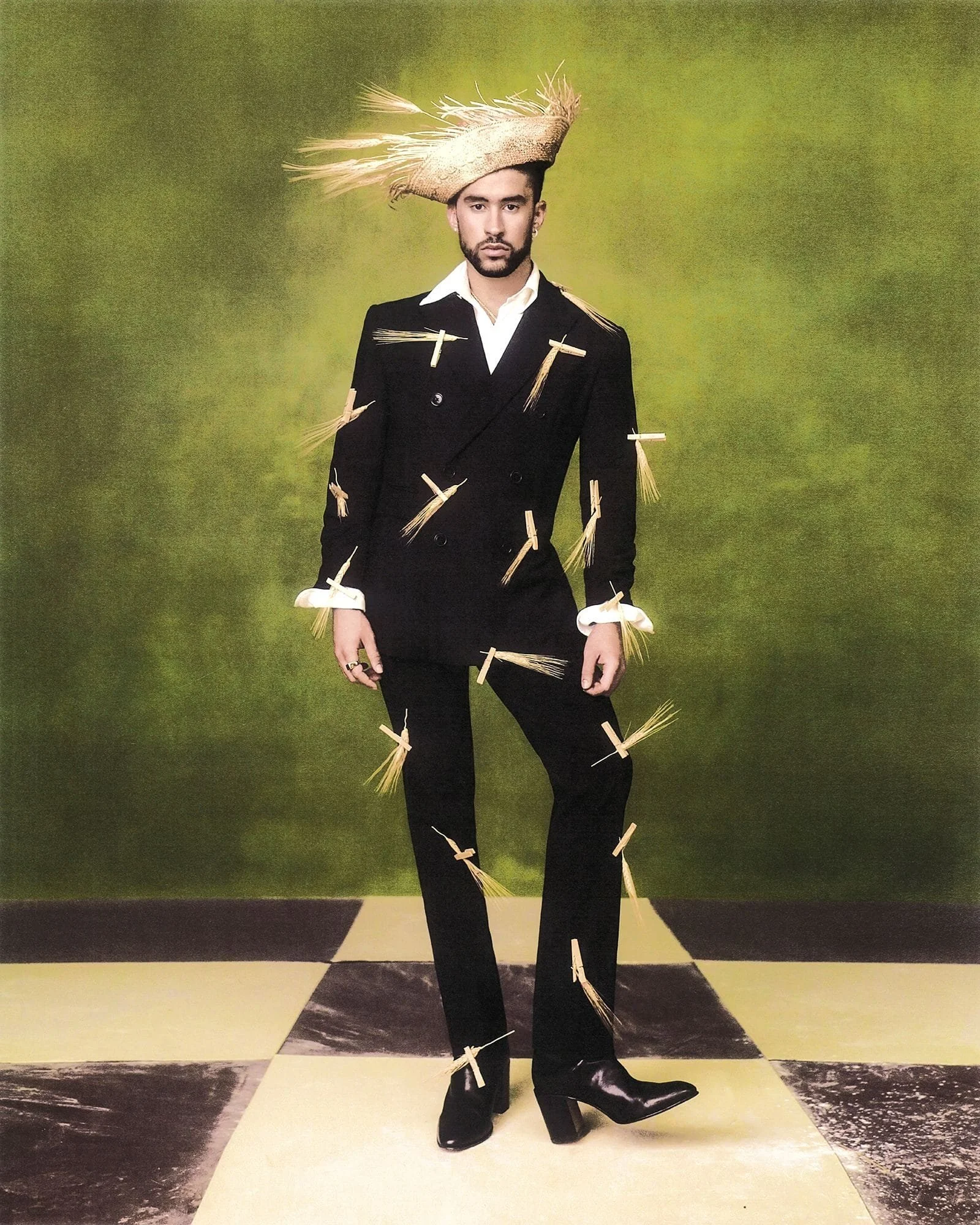
Bad Bunny for Vanity Fair
Makó knows how to put people in a box. Judging from popular perception, he knows how to put people in a box extremely well. Yet, it is the fame that immediately tells us that the box is a toy rather than a cage. Strip away the name, and the frame stays just as carefully curated, the colors just as flat, the fish just as enormous. What changes, I think, is that we would look longer, and still see a figurine—but with no name to explain it, held still.
All images courtesy of Szilveszter Makó.